
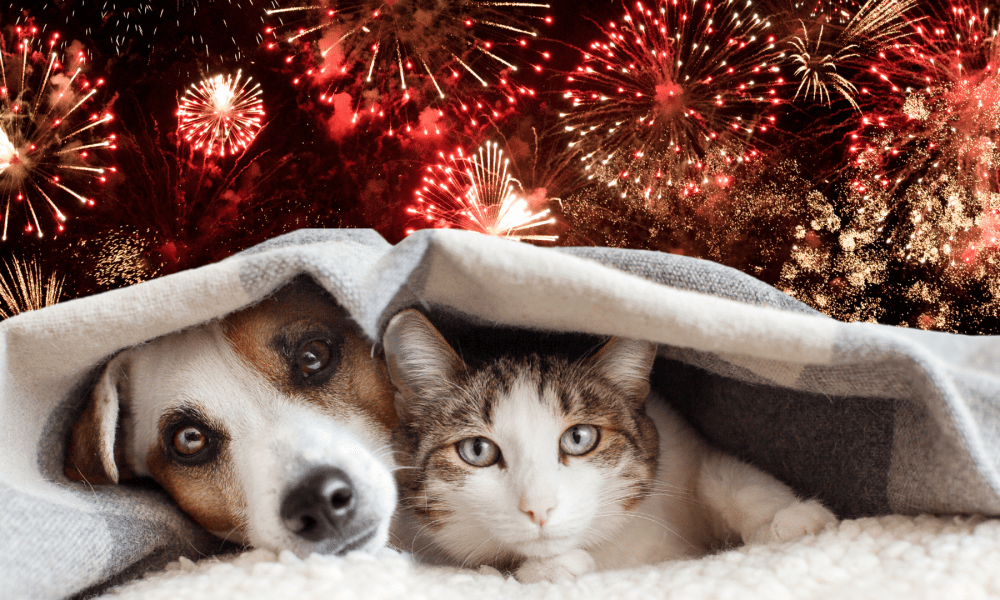
The Fourth of July: a pet’s least-favorite holiday
Did you know? About half of all pets that go missing every year are lost around the Fourth of July. It’s a scary statistic, but fortunately there are steps you can take to help keep your dog, cat, or other animals safe from the bang, boom, and pop of fireworks.
Before the Fireworks
- Exercise your pet in the daytime before fireworks begin. That can help tire them out so they sleep through the peak of the noise.
- Check your pet’s license, ID tag, and/or microchip, and make sure the information is up to date in case your pet escapes. Pets with ID are much more likely to be returned to their owners.
- Create a safe space in your home. Set up a quiet, comfortable room with familiar bedding and toys where they can relax. You may also consider using a white noise machine, a fan, or soft music to mask some of the fireworks noise. Cats often like a covered crate or a space under a bed where they can hide.
- Check with your veterinarian about calming aids that could help, and be sure to have those items in hand well before Independence Day.
During the Fireworks
- Keep your pet indoors. If they’re normally kept outside, consider bringing them into a well-ventilated garage, shed, or basement. Don’t leave them outdoors, as they could hurt themselves trying to escape.
- Close windows and curtains to block the flashes and reduce outside noise.
- Keep pets occupied with their favorite toys, chews, or treat puzzles.
- Stay calm, and don’t yell at or scold your pet if they seem frightened.
- Don’t assume that your pet won’t react to fireworks just because you haven’t had problems in the past. Sometimes, pets become sensitive to loud noises later in life.
- Never bring a pet to a fireworks display.
After the Holiday
If your pet does manage to escape despite your best efforts, Regional Animal Services of King County is ready to assist you. Our staff and volunteers at the King County Pet Adoption Center in Kent can help owners search the stray pet kennels, file a missing pet report, and more.
If you’ve lost a pet, you can find tips and information at kingcounty.gov/LostAPet, including photos and descriptions of stray pets that have been found. Owners should also check with other local shelters, and check back often, as spooked pets may travel long distances before being captured.
If you find a stray pet roaming your neighborhood, visit kingcounty.gov/FoundAPet for tips on how to reunite a lost pet with their family. Here are a few more suggestions for dealing with stray pets:
- Contain the pet. If it’s safe, try to confine the pet in a secure area, like a fenced yard or garage.
- Check for tags. Check for a pet license or other tags that might have the owner’s contact information. If the pet is licensed with RASKC, call the number on the tag (206-296-2712) and have the six-digit license number available. When you call, you will either reach our pet licensing staff or our automated voice response system. Give the license number to our staff, or enter the number when prompted by the automated system. You will be given the pet owner’s phone number so you can contact them directly to return their pet.
- Scan for a microchip. Take the pet to a veterinarian to be scanned for a microchip.
- Spread the word. Use social media and online platforms. Create a found pet flyer, and post copies around your neighborhood. Ask neighbors if they know where the pet lives. Report the found pet to RASKC and search our lost pet database to see if you found a pet the family is looking for.
 Tails from RASKC